
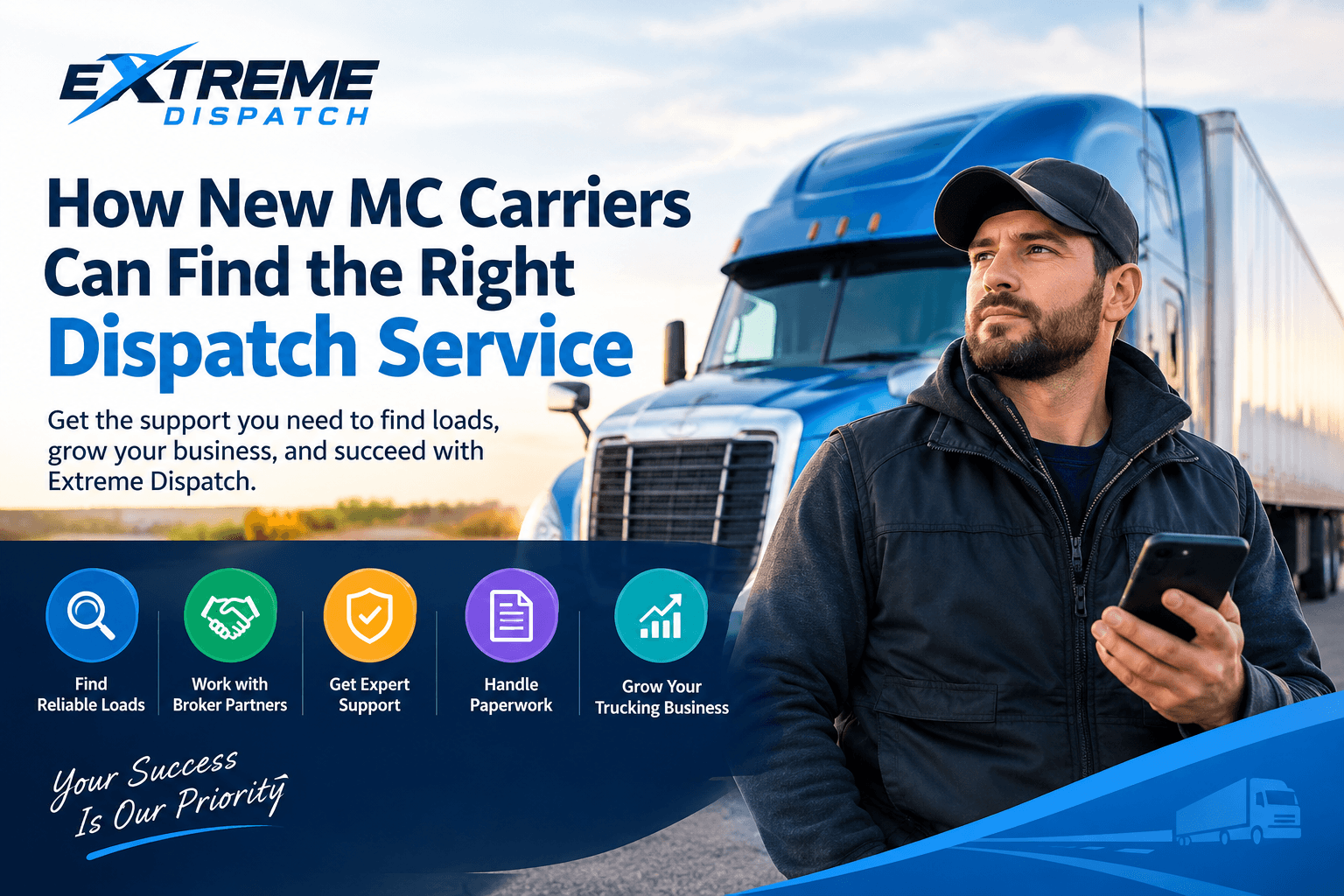
How Can New MC Carriers Find a Truck Dispatching Service That Accepts New Authority?
It can be difficult to launch a trucking company with a new Motor Carrier (MC) authority. Finding trustworthy loads, building connections with brokers, comprehending rate negotiations, and handling the documentation necessary to maintain smooth operations are all common tasks for new carriers. These duties can be made simpler by locating an appropriate truck dispatching service, freeing up owner-operators to concentrate on running their vehicles and expanding their companies.
Not all dispatching firms, meanwhile, collaborate with recently approved carriers. While freight brokers and shippers may implement their own authority-age, insurance, and carrier verification regulations, certain services have certain onboarding requirements. Because of this, new MC carriers should seek out a dispatching agency that can clearly explain its procedures and comprehend the difficulties of launching a trucking company.
We’ll go over how new MC carriers can locate an appropriate dispatching service, what to look for before signing a contract, and how to pick a business that aligns with their objectives.
Why Is Finding a Dispatching Service Difficult for New MC Carriers?
When new MC carriers enter the trucking business, they must overcome several obstacles. They may have few broker connections, little expertise in negotiating freight rates, and concerns about finding loads through accessible freight marketplaces without a track record of successful operations.
Before they can schedule loads, some brokers require carriers to meet minimum authority-age standards. Broker, goods type, insurance coverage, and other risk-related considerations all have different requirements. Access to some loads may still be restricted even if a carrier has the required insurance and active authority.
New carriers can analyze load possibilities, contact with brokers, find appropriate freight prospects, and handle booking paperwork with the aid of a truck dispatching service. Dispatchers cannot, however, ensure that every cargo will be accessible to a certain carrier or that every broker will accept a new authority.
Therefore, dispatching firms that are open about these restrictions and describe how they find opportunities for qualified carriers should be given priority by new carriers.
1. Search for Dispatching Companies That Work With New Authority
Finding truck dispatching providers that expressly indicate they collaborate with newly authorized trucking companies or new MC carriers is the first step. Use terms like dispatch service for new owner-operators,” “truck dispatching service for new MC authority, and dispatch company accepting new carriers” to conduct an online search.
Examine each company’s website to learn about its offerings, prerequisites for onboarding, and experience with various carrier types. Verify if your equipment type, such as a dry van, reefer, flatbed, box truck, or straight truck, is supported by the company.
Additionally, you should get in touch with possible dispatchers personally. Describe your authority’s activation date, the equipment you use, your preferred lanes, and whether your insurance and registration requirements are met.
Ask the dispatcher if carriers with your authority age and equipment type are currently accepted by the company. Before you spend time filling out an application, a clear response will help you decide if the service is appropriate.
2. Check Whether Your MC Authority and Documents Are Ready
Make sure your trucking firm is ready to go before employing a dispatcher. Which goods opportunities are available to you may depend on your level of preparedness.
A current USDOT registration, suitable insurance filings, active operating authority, and other necessary registrations or papers may be necessary, depending on the nature of your business. Additionally, your company should be ready to finish carrier verification and broker onboarding processes.
A dispatching provider may request facts about your preferred lanes, equipment, insurance coverage, operating authority, and business contact information. Find out which paperwork needs to be finished before the dispatcher can start looking for loads and which is necessary during onboarding.
Keep in mind that you still have legal obligations as a motor carrier even if you hire a dispatcher. It is still your responsibility to comply with all applicable operating, insurance, safety, and registration requirements.
3. Choose a Dispatcher That Understands New Carrier Challenges
Experience with new MC carriers can be helpful because fledgling companies could require more direction than fleets with more experience. An appropriate dispatcher should describe how the load-booking procedure operates, what information brokers might ask for, and how to assess the goods that are offered.
Find out how the business looks for loads and decides whether a broker will cooperate with a recently approved carrier. Learn how dispatchers discuss possible problems, evaluate pickup and delivery criteria, and compare rates before accepting a load.
It’s important to know who makes the ultimate booking decision. You have the authority to decide whether to accept a load in accordance with your agreement, but a dispatcher should outline your options and provide pertinent information.
Steer clear of businesses that guarantee loads, offer exceptionally high rates, or assure broker acceptance. Market conditions, equipment, location, and carrier eligibility all affect freight availability. Both the opportunities and the restrictions will be explained by a reliable service.
4. Compare Dispatch Fees and Contract Terms
For new carriers, dispatching fees are a crucial factor to take into account, particularly when cash flow is tight during the initial months of operation. Businesses may impose a fixed fee, a percentage of income, or another predetermined price structure.
Find out fully how the charge is determined before signing an agreement. If the business charges a percentage, for instance, make it clear if this applies to the whole load income, the agreed-upon line-haul amount, or another specified amount. Verify if the computation includes accessorial payments, detention, layover, or other fees.
The terms of cancellation, the duration of the contract, the payment plan, and any extra fees should all be reviewed. Make sure you know if exclusivity is required for the service and how to terminate the contract if it doesn’t suit your needs.
A dispatching provider should not be chosen just on the basis of cost. While a larger charge does not always translate into better outcomes, a cheap fee could not offer the kind of support or communication you need. Examine the services offered, the conditions of the contract, and the company’s capacity to fulfill your operating requirements.
5. Ask How the Company Finds Loads for New MC Carriers
One of the most crucial questions is how a dispatcher finds freight possibilities that fit the equipment and eligibility of a new carrier.
Find out if the business employs direct contacts, goods load boards, current broker relationships, or a mix of these. Before presenting a load for your evaluation, see how it verifies load details and detects any limitations.
When assessing possible freight, a skilled dispatcher should take your equipment type, present location, chosen routes, available driving hours, and operational expenses into account. Finding a load is not the only objective; you also need to find a business-friendly opportunity.
For instance, after deducting fuel, tolls, deadhead miles, and other operational costs, a load with an alluring gross rate may become less profitable. Examine the entire rate confirmation, pickup and delivery schedules, terms of payment, and any special criteria before accepting a shipment.
Additionally, new carriers should enquire about the dispatcher’s communication methods when appropriate cargoes are not available. Since planning and cash flow management can have a big impact in the early phases of a trucking firm, open communication is especially crucial.
6. Evaluate Communication and Customer Support
Effective communication keeps your business organized and helps avoid misunderstandings. Prior to selecting a dispatching service, find out when support is accessible and how you will communicate with your designated dispatcher.
Find out how the firm usually responds to enquiries, whether you will have a particular point of contact, and how it manages changes to delivery or pickup schedules.
After a load is scheduled, you should also make clear the dispatcher’s responsibilities. Find out if the service helps with detention requests, paperwork coordination, rate confirmations, broker communication, and other agreed-upon administrative chores.
Pay close attention to customer evaluations and search for consistent comments regarding professionalism, responsiveness, and openness. Before signing a long-term contract, you can also request a thorough explanation of the company’s procedure.
Instead of leaving you in the dark about load specifics, costs, or obligations, the proper dispatching relationship should help you comprehend your options.
Find the Right Truck Dispatching Service for Your New MC Authority
Choosing a truck dispatching service that understands new MC authority requirements can help you approach the early stages of your trucking business with a clearer plan. Look for a company that communicates honestly, explains its fees, understands your equipment, and can describe how it searches for freight opportunities that match your eligibility.
Before signing an agreement, verify your operating readiness, review the contract, and ask specific questions about broker requirements and load-booking procedures. No dispatcher can guarantee that every broker will accept your authority, but a transparent service can help you evaluate available opportunities and manage important administrative tasks.
If you are a new MC carrier looking for dispatching support, Extreme Dispatch can be a starting point for learning about available truck dispatching services. Discuss your authority age, equipment type, preferred lanes, and business needs with the team to determine whether its service is a suitable fit for your operation.
FAQs
1. Can a new MC carrier hire a truck dispatching service?
Yes, some dispatching companies work with new MC carriers, depending on their onboarding requirements and equipment type.
2. How can new MC carriers find a dispatching service?
Search online for dispatch companies that accept new authority and confirm their requirements before signing an agreement.
3. Can a dispatch service guarantee loads for new MC carriers?
No. Load availability depends on broker requirements, authority age, equipment, location, and market conditions.
4. How much does a truck dispatching service cost?
Costs vary by company. Dispatchers may charge a percentage of revenue, a flat fee, or another agreed rate.
5. What should new MC carriers check before hiring a dispatcher?
Check dispatch fees, contract terms, communication, equipment compatibility, and experience working with new authorities.