
Dispatch Service for New MC Authority: How to Find the Right One
Getting your MC authority is the easy part. Finding freight is harder. Many brokers want to see an operating history, and some dispatchers hesitate to work with carriers that have no track record. As a result, new carriers often struggle to book consistent loads in their first months.
The right dispatch service for new MC authority can close that gap. A professional truck dispatch company finds suitable loads, communicates with brokers, negotiates rates, and handles your paperwork, so you can focus on driving.
However, not every dispatcher accepts newly authorized carriers. That is why it is important to know what to look for before you sign an agreement.
In this guide, you will learn how to find a dispatcher that works with new MC carriers, which documents to prepare, how dispatch fees work, and which red flags to avoid.
Why Is It Hard for New MC Carriers to Find a Dispatch Service
New MC carriers face two hurdles at once: brokers and dispatchers. Many freight brokers set their own onboarding rules, insurance minimums, and operating-history requirements. Some dispatch companies also limit which new carriers they accept, because a carrier with no history is harder to place with brokers.
Here are the most common challenges new carriers run into:
- Few broker relationships. Without a track record, brokers have no reason to trust you yet.
- Brokers that avoid new authorities. Some require a minimum number of days or months of active authority before approving a carrier.
- Little load board experience. It is hard to tell a good rate from a bad one when you are just starting.
- Paperwork and compliance confusion. Missing or incorrect documents can delay broker onboarding.
- Trouble spotting profitable loads. A high-paying load can still lose money after fuel, tolls, and deadhead miles.
- Doing everything alone. Dispatching, rate negotiation, invoicing, and broker calls take hours that you could spend driving.
None of this means a new carrier cannot find freight. It means preparation matters. If you get your documents in order and work with a dispatcher who regularly handles new authorities, you can get past these early obstacles faster.
Choose a Dispatch Company That Accepts New MC Authority Carriers
Start by building a shortlist of dispatchers that openly work with new MC authority carriers. Do not sign with the first company that shows up in search results. Check each company’s website, ask directly whether they accept carriers with little or no operating history, and find out what their minimum requirements are.
Once you have a shortlist, compare them on these five points:
- Experience with new carriers. Ask how many new authorities they have worked with, and what they did differently in the first 30 to 90 days.
- Equipment knowledge. Make sure they know your trailer type, whether it is dry van, reefer, flatbed, step deck, power only, or hot shot. Each has different lanes, rates, and broker requirements.
- Broker onboarding support. A good dispatcher knows what brokers ask for and helps you complete setup packets quickly and professionally.
- Load selection. They should check the rate per mile, pickup and delivery locations, deadhead miles, and your operating costs before recommending a load, not just the total payout.
- Communication. Ask how often you will get updates, who talks to brokers, and how fast they respond when something goes wrong on the road.
A dispatcher who understands these early-stage challenges can help you book your first loads with more confidence and fewer costly mistakes.
Get Your MC Authority and Documents Ready
Before you hire a dispatcher, get your paperwork in order. Brokers will not approve your carrier setup or book loads with you until they have verified your authority and insurance. If your documents are missing or out of date, onboarding slows down, and your first loads are delayed.
Requirements vary by broker, equipment type, and insurance coverage, but most will ask for the following:
- Active MC authority. Confirm your authority shows as active, including your BOC-3 filing.
- USDOT number and company details.
- Certificate of insurance (COI). Make sure it is current and meets broker minimums.
- W-9 form.
- Signed carrier setup packet. Most brokers have their own carrier-broker agreement.
- Payment details. This is your bank information, or your factoring company’s details and Notice of Assignment (NOA) if you use factoring.
- Equipment and contact information. This covers trailer type, dimensions, and dispatcher or driver contacts.
Keep digital copies of everything in one folder, so you can send them to brokers within minutes. New to all this? Read our guide to MC authority requirements for new carriers first.
Choose a Dispatcher Who Knows Your Equipment Type
Not every load fits every truck. Your trailer type decides which freight you can haul, which rates you can expect, and which brokers will work with you. A good dispatcher knows your equipment well and only books loads that match it.
Here is how the main equipment types differ:
- Dry van: Hauls general, palletized, and packaged freight inside an enclosed trailer. Load availability is high, which makes it a common starting point for new carriers.
- Reefer: Hauls temperature-sensitive freight such as food and medicine. Your dispatcher needs to understand temperature requirements and strict delivery windows.
- Flatbed: Hauls steel, lumber, construction materials, and machinery. Loads often need tarping and securement.
- Step deck: Hauls taller freight that will not fit on a standard flatbed, thanks to its lower deck height.
- Power only: You pull trailers supplied by brokers or shippers. This is useful if you have a truck but no trailer.
- Hot shot: Smaller trucks with specialized trailers, used for time-sensitive or smaller shipments.
Before you hire, ask the dispatcher which lanes and brokers they use for your equipment, and what rates they typically see. If they cannot answer with specifics, they may not know your equipment well enough.
Check How Your Dispatcher Communicates and Negotiates Rates
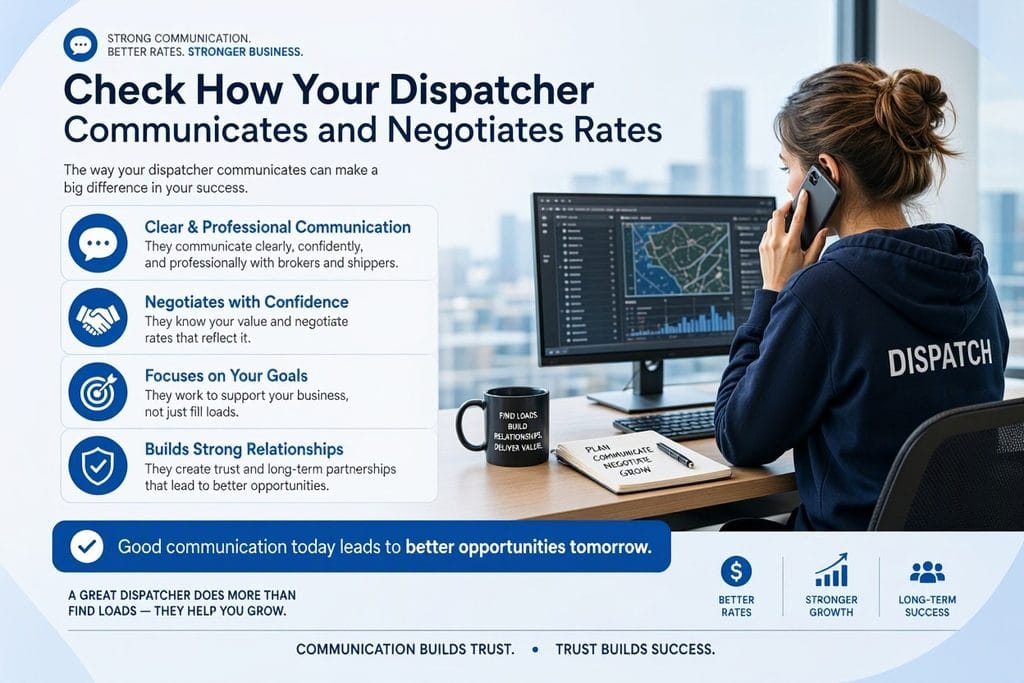
A dispatcher spends most of the day talking to brokers on your behalf. How they communicate, and how they negotiate directly affects your income and your reputation with those brokers.
Ask each dispatch company how they handle these situations:
- Rate negotiation. Do they counter-offer, or just accept the first rate? Ask how they decide when to push back and when to walk away from a load.
- Rate confirmations. Do they check the rate, pickup and delivery details, and detention terms before you sign?
- Pickup and delivery updates. How often will you hear from them, and by which channel (call, text, or app)?
- Delays and appointment changes. Who contacts the broker if you are running late or the receiver reschedules?
- Missing or incorrect paperwork. Who fixes problems with the BOL, POD, or invoice so your payment is not held up?
- After-hours support. Can you reach someone during a breakdown or a late-night problem? At Extreme Dispatch, our team is available 24/7, so you are never stuck waiting until morning.
Good negotiators do their homework first. They check current rates on that lane, how much demand there is, how easy it is to find a return load, and what the load actually requires. They use that information to ask brokers for a better rate, instead of guessing.
Be realistic, though. No dispatcher can guarantee a specific rate or a steady supply of freight, because both depend on the market, the broker, and your equipment. A dispatcher who promises otherwise is a red flag. Look for clear communication, honest answers, and written terms.
Check Reviews and Ask the Right Questions Before You Hire
Before you sign with a dispatcher, check their reputation. Anyone can claim to be experienced, so look for proof.
How to research a dispatch company:
Ask for references. A confident dispatcher can connect you with carriers who run similar equipment to yours.
Read reviews in more than one place. Check Google, Trustpilot, and the Better Business Bureau, plus trucking groups on Facebook or Reddit, where carriers talk openly about their dispatchers.
Look for a real business presence. A working website, a physical address, a phone number that gets answered, and a named team are good signs.
How Extreme Dispatch Helps New MC Carriers
Getting your MC authority is only the start. Next, you need freight, broker approvals, paperwork, invoicing, and a way to keep track of your costs. That is a lot to handle while you are also driving.
At Extreme Dispatch, a dedicated dispatcher gets to know your equipment, your preferred lanes, and your goals. We handle the daily work so you can focus on the road:
Factoring support: We work with your existing factoring company, or help you find one.
Truck dispatching: We find loads, plan routes, and talk to brokers for you.
Rate negotiation: We compare offers and negotiate with brokers before you accept a load.
Document management: We take care of rate confirmations, BOLs, PODs, and carrier setup paperwork.
Truckers accounting: We help you track income and expenses.
Final Thoughts
The right dispatch service for new MC authority carriers can save you months of trial and error. To choose well:
- Pick a dispatcher that openly accepts new carriers.
- Get your authority, insurance, and documents ready before you apply.
- Make sure they know your equipment type.
- Understand the fee structure, and get the agreement in writing.
- Ask how they find loads, negotiate, and communicate.
- Check reviews and watch for red flags.
No dispatcher can guarantee loads or income, but an honest one with clear terms can make your first months much smoother. Ready to get started? Talk to Extreme Dispatch today.
Frequently Asked Questions
1. Can new MC carriers hire a dispatch service?
Yes. Some dispatch companies work with newly authorized carriers, although individual companies may have their own eligibility and documentation requirements.
2. Do dispatch companies accept carriers with less than 90 days of authority?
Some dispatch providers accept newer carriers, but broker onboarding policies and insurance requirements can affect available freight opportunities.
3. What documents does a new MC carrier need for dispatch services?
Common documents include MC and USDOT information, a certificate of insurance, W-9, carrier setup information, and equipment details.
4. How do new MC carriers find profitable loads?
New carriers can use load boards, broker relationships, and dispatching support to identify suitable freight. They should compare total revenue with mileage and operating expenses.
5. What should new carriers check before hiring a dispatcher?
Carriers should review experience, supported equipment types, dispatch fees, communication practices, agreement terms, and services included.
6. Can a dispatch company guarantee loads for new MC carriers?
No legitimate dispatcher can guarantee consistent loads or specific earnings. Freight availability depends on market conditions, broker requirements, equipment, and carrier eligibility.