
How New MC Carriers Can Find Profitable Truckloads
New MC carriers can find profitable truckloads by using load boards, getting approved with brokers that accept new authorities, choosing loads that match their equipment, and checking the real profit of every load before accepting it. Finding loads is not just about keeping the truck moving. Freight rate, fuel, deadhead miles, delivery location, and operating costs all decide whether a load makes money.
Starting with a new MC authority is exciting, but it comes with a challenge: no broker relationships, no operating history, and little load board experience. This guide explains how to find freight, evaluate it, cut unnecessary costs, and build a solid base for long-term trucking operations.
In this guide:
- Why finding profitable loads is hard with a new MC number
- How to use load boards, build broker relationships, and match loads to equipment
- How to reduce deadhead miles and negotiate rates
- When a dispatching company can help
Why Is Finding Profitable Truckloads Difficult for New MC Carriers?
New trucking companies have limited industry experience and fewer broker relationships. Some freight brokers also set minimum authority-age rules, insurance conditions, and carrier onboarding policies, which can block access to certain loads.
Other common challenges include:
- Limited experience with freight load boards
- Difficulty finding brokers that accept new authorities
- Uncertainty about competitive freight rates
- High fuel and operating expenses
- Difficulty planning routes and reducing empty miles
- Limited knowledge of equipment-specific loads
Finding available freight and finding profitable freight are two different things. A good load must match your equipment, operating costs, preferred routes, and business needs.
Use Freight Load Boards to Find Available Truckloads
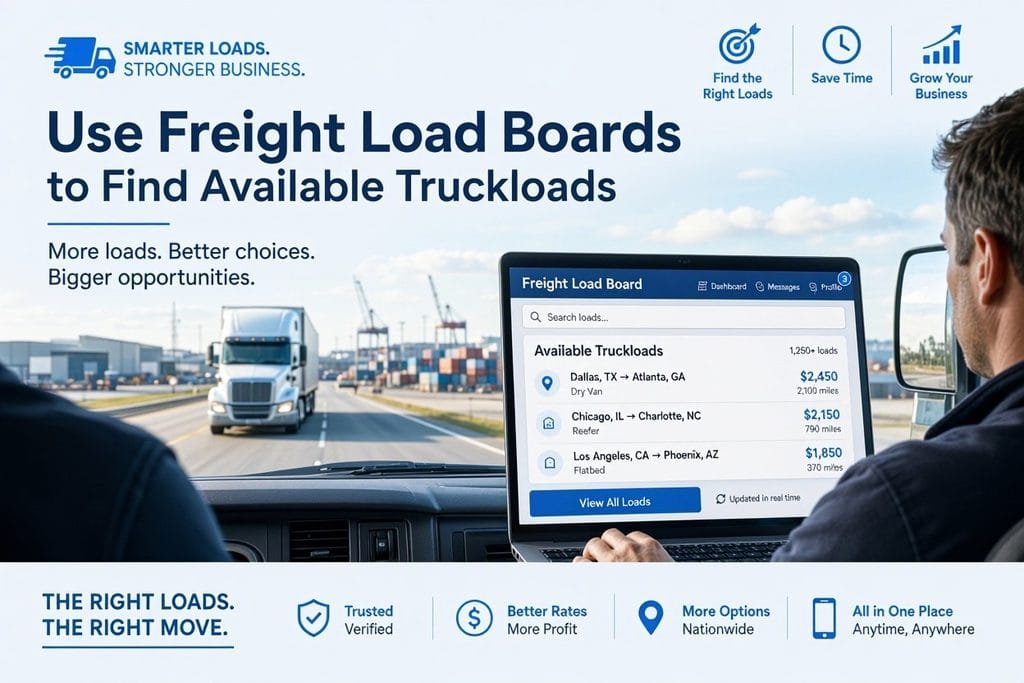
Freight load boards connect carriers with loads posted by brokers, shippers, and other transportation providers. New MC carriers can research platforms such as DAT and Truckstop to see available loads and understand market conditions.
When you search for truckloads, check these details:
| What to check | Why it matters |
| Pickup and delivery locations | Match your preferred areas and delivery schedule |
| Equipment requirements | Confirm trailer type, dimensions, and capabilities |
| Rate per mile | Compare the rate with total miles and your expenses |
| Pickup appointments | Review loading and unloading times before you accept |
| Broker requirements | Confirm the broker accepts your authority age and documents |
A load on a board does not guarantee broker approval. Always verify the broker and the shipment details before you accept a load.
Build Relationships With Freight Brokers
Good relationships with freight brokers can lead to more consistent freight. Many brokers review your operating authority, insurance, safety information, and business documents before approving your carrier account.
Start with brokers that work your equipment type and preferred routes. Then follow these steps:
- Identify reputable freight brokers in your target markets.
- Review their carrier onboarding requirements.
- Prepare your MC, USDOT, W-9, and insurance information.
- Submit accurate carrier registration details.
- Keep communication professional.
- Follow the agreed pickup and delivery schedules.
If a broker declines your authority because of its age, ask when you can apply again. Dependable service builds trust over time. Repeat freight is never guaranteed, but good broker relationships make future load searches easier.
Choose Loads That Match Your Trucking Equipment
Different trailers carry different cargo, and each has its own requirements. New MC carriers should focus on freight that fits their truck and trailer.
| Equipment | Typical freight | What to confirm |
| Dry van | Packaged goods, consumer products, general enclosed freight | Weight, dimensions, delivery requirements |
| Reefer | Food and other temperature-sensitive goods | Temperature settings, monitoring, delivery appointments |
| Flatbed | Construction materials, steel, machinery, oversized freight | Cargo dimensions, securement, loading arrangements |
| Step deck | Taller freight, industrial equipment, specialized cargo | Vertical clearance and dimensions |
| Power only | Trailers supplied by brokers or shippers | Trailer availability, compatibility, and arrangements |
Choosing the right freight category helps you focus on loads that match your equipment and business. Explore our dry van dispatch services for equipment-specific support.
Reduce Deadhead Miles Through Better Route Planning
Deadhead miles are miles your truck drives without a paying load. They add expenses without adding revenue.
Check the destination of every load before you accept it. A load with an attractive rate can drop your truck in an area with little outbound freight, and you may have to drive far to find the next one.
To reduce empty miles:
- Research freight availability near the delivery location.
- Look for return loads before you finish the current trip.
- Focus on routes with steady freight demand.
- Avoid unnecessary repositioning.
- Track completed routes and operating expenses.
- Compare regional and long-distance freight.
Careful route planning helps you use your equipment efficiently and make better freight decisions.
5. Understand Broker Requirements for New MC Authority
An MC number does not automatically qualify you to work with every broker. Onboarding policies vary. Some brokers require a minimum period of operating authority, while others look at insurance, safety information, equipment, and business documents.
Before you search for loads, make sure your carrier information is accurate, and your authority is active.
Common onboarding documents:
- MC authority information
- USDOT information
- Certificate of insurance
- W-9 tax form
- Carrier registration documents
- Business contact information
Also verify broker identities and review every rate confirmation carefully before you accept a shipment. This keeps you focused on freight you can actually qualify for.
6. Negotiate Freight Rates and Compare Load Offers
Rate negotiation is a key part of managing trucking revenue. The first rate a broker offers may not be the best available. Learn the market conditions, mileage, equipment needs, and shipment details before you discuss rates.
Consider these factors in negotiations:
- Total mileage and deadhead distance
- Current freight demand on the route
- Pickup and delivery schedules
- Fuel and operating expenses
- Equipment availability
- Shipment weight and handling requirements
Keep the conversation professional, ask for a reasonable rate, and avoid loads that do not cover your operating costs. A simple check before you accept: total revenue minus fuel, tolls, fees, and maintenance, divided by total miles including deadhead.
Explore rate negotiation services to see how professional support can help you evaluate freight offers.
Final Thoughts
Finding profitable truckloads as a new MC carrier takes more than searching load boards. Understand broker requirements, know your operating costs, choose freight that fits your equipment, and plan routes carefully.
Build broker relationships, reduce empty miles, and compare rates before you accept. A dispatching company can add support with load searches, broker communication, and paperwork. With a consistent freight strategy and informed decisions, new MC carriers can build a stronger foundation for their trucking operations.
Frequently Asked Questions
1. How can new MC carriers find profitable truckloads?
Use freight load boards, research brokers that accept your authority age, build professional relationships, and compare shipments against your operating expenses and total mileage.
2. Which load boards are useful for new trucking companies?
DAT and Truckstop are established freight load board platforms. Review platform features, subscription requirements, and eligibility conditions before choosing one.
3. Do freight brokers accept new MC authority?
Some brokers accept newly authorized carriers, while others require a minimum authority age or additional onboarding. Policies vary between brokers.
4. How can truckers reduce deadhead miles?
Research freight near delivery locations, plan return trips, compare routes, and check outbound freight availability before accepting a shipment.
5. What is a good rate per mile for new MC carriers?
No single rate guarantees profitability. A suitable rate depends on equipment, route, fuel expenses, market conditions, deadhead miles, and other operating costs.
6. Can a dispatch service help new carriers find loads?
Yes. Dispatch services can help eligible carriers find freight, communicate with brokers, compare loads, and coordinate paperwork. Broker approval and freight availability are not guaranteed.